
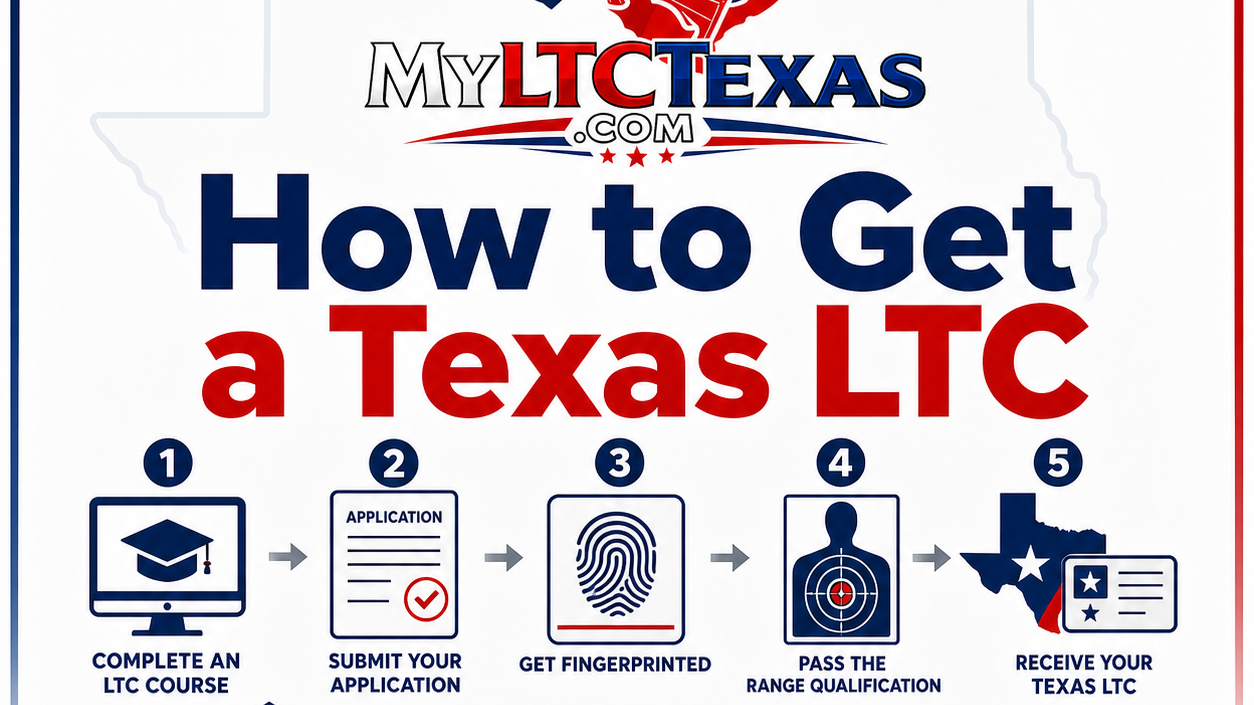
How to Get a Texas LTC in Texas
If you want to get your Texas License to Carry, also called a Texas LTC, the process is fairly simple once you understand the steps. Even though Texas allows permitless carry for many people, a Texas LTC can still offer important benefits, including reciprocity with other states, proof of training, and a smoother experience when carrying legally.
This guide walks you through how to get a Texas LTC from start to finish.
What Is a Texas LTC?
A Texas LTC is a License to Carry a Handgun issued by the Texas Department of Public Safety. It allows eligible individuals to carry a handgun openly or concealed under Texas law.
Before 2021, most people needed an LTC to carry a handgun in public in Texas. Today, many people may carry without a license under permitless carry laws, but getting an LTC is still a smart choice for many responsible gun owners.
Step 1: Make Sure You Are Eligible
Before applying, you should make sure you meet the basic Texas LTC eligibility requirements.
In general, applicants must be legally allowed to possess a handgun and must meet Texas DPS requirements. Some criminal history, certain alcohol or drug-related offenses, protective orders, unpaid child support, or other legal issues may affect eligibility.
If you are unsure whether you qualify, check the official Texas DPS handgun licensing eligibility information before paying for a class or application.
Step 2: Take a Texas LTC Class
To get your Texas LTC, you must complete the required handgun training.
You can usually complete the classroom portion in one of two ways:
- Take an in-person Texas LTC class
- Take an approved online Texas LTC class
The classroom portion covers important topics such as Texas handgun laws, safe storage, use of force, non-violent dispute resolution, and handgun safety.
Online LTC classes are popular because they let you complete the classroom portion at your own pace from home. After finishing the online portion, you still need to complete the handgun proficiency portion with a qualified Texas LTC instructor.
Step 3: Complete the Range Qualification
After the classroom portion, you must complete the shooting proficiency requirement. This is often called the Texas LTC shooting test or range qualification.
During this step, you will demonstrate that you can safely handle and shoot a handgun. A qualified Texas LTC instructor will supervise the range portion and complete the required paperwork once you pass.
This part is important because the online class alone does not complete the full LTC training requirement. You need both the classroom training and the proficiency demonstration.
Step 4: Get Your LTC Training Certificate
After you complete the required training, you will receive a training certificate.
- LTC-104
This certificate is one of the most important documents in the Texas LTC process. You will need to submit it to Texas DPS as part of your application.
Step 5: Submit Your Texas DPS LTC Application
Next, you will apply through the Texas DPS License to Carry online system.
During the application, you may need to provide information such as:
- Texas driver license or ID information
- Contact information
- Address history
- Employment information
- Criminal, psychiatric, drug, or alcohol history if applicable
- Payment for state application fees
Make sure your information is accurate. Mistakes can slow down your application.
Step 6: Schedule Your Fingerprints
Texas LTC applicants are required to submit fingerprints. After starting your application, you can schedule a fingerprint appointment through the approved fingerprinting provider used by Texas DPS.
Your fingerprints are used for the background check portion of the LTC application process.
Step 7: Upload Your Documents to DPS
After completing your training and application, upload your LTC training certificate and any other required documents to Texas DPS.
This usually includes your completed LTC-104 form. If DPS requests additional documentation, submit it as soon as possible to avoid delays.
Step 8: Wait for DPS Processing
Once DPS has your application, fingerprints, payment, and required documents, your application will be reviewed.
Processing times can vary. If your background check is clear and all documents are submitted correctly, the process is usually much smoother. If something is missing or needs review, it may take longer.
You can check your Texas LTC application status through the Texas DPS online system.
Is a Texas LTC Still Worth It?
For many people, yes. A Texas LTC may still be worth getting even though Texas has permitless carry.
Some common benefits include:
- Reciprocity with other states that recognize a Texas LTC
- Easier proof that you completed handgun safety training
- Better understanding of Texas carry laws
- Potential convenience during certain firearm purchases
- Confidence when carrying responsibly
An LTC is not just a card. It is also training, documentation, and peace of mind.
How Long Does It Take to Get a Texas LTC?
The total time depends on how quickly you complete each step. The fastest applicants usually complete their class, range qualification, fingerprints, DPS application, and document upload quickly.
Delays often happen when applicants forget to upload their training certificate, submit incorrect information, or have background check issues that require review.
Final Thoughts
Getting a Texas LTC is a straightforward process when you follow the steps in order:
- Confirm eligibility
- Complete an approved LTC class
- Pass the range qualification
- Get your LTC-104 form
- Apply through Texas DPS
- Submit fingerprints
- Upload documents
- Wait for approval
If you are ready to get started, taking a Texas LTC class is the first major step toward completing your License to Carry.
Call to action:
Ready to get your Texas LTC? Start your License to Carry training online today by visiting MyLTCTexas.com and take the next step toward carrying responsibly in Texas.
Disclaimer: This article is for general educational purposes only and is not legal advice. Always confirm current requirements with Texas DPS or a qualified legal professional.