Texas LTC Checklist | What You Need for Your License to Carry
Texas LTC Checklist
Getting your Texas License to Carry, also called a Texas LTC, is much easier when you have a clear checklist. Many application delays happen because one step is missed, such as forgetting fingerprints or failing to upload the training certificate.
Use this Texas LTC checklist to stay organized from start to finish.
Texas LTC Checklist at a Glance
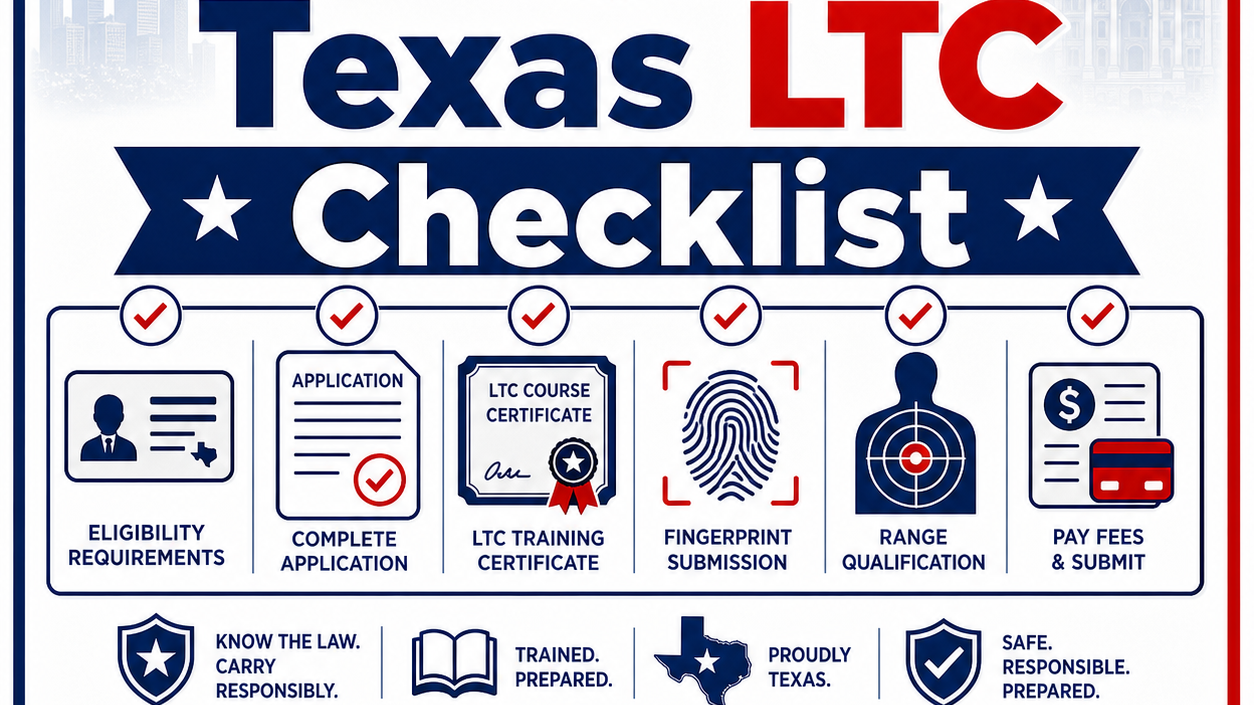
Before your Texas LTC application is complete, you generally need:
- Valid identification
- Legal eligibility to possess a handgun
- Completed LTC classroom training
- Written test completion
- Handgun proficiency or range qualification
- LTC-104 certificate
- Texas DPS online application
- Fingerprints
- Payment for required fees
- Supporting documents, if requested by DPS
Texas.Gov says applicants must apply online, pay required fees, complete training, submit supporting documents including the LTC-104, and follow fingerprinting instructions.
1. Valid Identification
You will need a valid ID when completing your Texas LTC application. Most Texas residents use a Texas driver license or Texas ID.
Make sure your information is correct and consistent. Your name, date of birth, address, and ID information should match your DPS application and training paperwork.
2. Eligibility to Get a Texas LTC
Before applying, confirm that you are eligible for a Texas License to Carry.
You must meet federal and state requirements to possess a handgun. Certain criminal history, protective orders, pending charges, drug or alcohol issues, and other legal factors may affect eligibility.
If you are unsure, review the official Texas DPS eligibility information before spending money on the application.
3. LTC Classroom Training
Texas LTC applicants must complete required classroom training unless exempt through a special condition.
The classroom portion covers topics such as:
- Texas handgun laws
- Use of force and deadly force
- Handgun safety
- Safe storage
- Non-violent dispute resolution
- Carry responsibilities
According to Texas.gov, LTC classroom training is generally four to six hours and may be completed in person or online with an approved provider.
4. Written Exam
The Texas LTC course includes a written exam based on the classroom material.
This exam helps confirm that you understand the safety rules, legal topics, and responsibilities discussed during training.
5. Handgun Proficiency Qualification
You also need to complete the handgun proficiency portion, often called the Texas LTC shooting test or range qualification.
During this step, a certified LTC instructor observes your ability to safely handle and fire a handgun.
If you complete the classroom training online, you still need to attend the in-person range instruction and proficiency portion.
6. LTC-104 Certificate
After completing the required training, you will receive a certificate of training.
- LTC-104
This form is important because DPS needs it as proof that you completed the required training. Keep a digital copy and a backup copy if possible.
7. Texas DPS Online Application
You must submit your License to Carry application through the Texas DPS online system.
The application may ask for:
- Personal information
- Driver license or ID information
- Address history
- Background questions
- Special condition information, if applicable
- Payment for required state fees
Double-check everything before submitting. Small errors can slow the process.
8. Fingerprints
Original Texas LTC applicants are required to submit fingerprints to DPS as part of the application process.
DPS states that fingerprints are used for a state and FBI criminal history background check. Applicants usually schedule fingerprints electronically through the approved fingerprinting provider after submitting the online application.
9. Required Fees
Be prepared for possible costs such as:
- LTC class fee
- Range qualification fee
- DPS application fee
- Fingerprinting fee
- Additional document or service fees, if applicable
Texas.gov lists the original LTC application fee as $40, but fees can vary for special conditions. Always verify current fees before applying.
10. Supporting Documents
Some applicants may need to submit extra supporting documents.
This may apply if you have:
- Military or veteran status
- A name change
- Out-of-state residency
- Special condition status
- Criminal history
- A DPS request for more information
Always read your DPS receipt or email carefully. Texas.gov notes that applicants must submit all documents listed in their receipt or email.
Best Order to Complete the Texas LTC Checklist
A simple order for most applicants is:
- Confirm eligibility
- Take the LTC class
- Complete range qualification
- Receive your LTC-104
- Submit the DPS application
- Schedule fingerprints
- Upload supporting documents
- Check application status
This order keeps the process clean and helps you avoid missing a step.
Common Checklist Mistakes
Avoid these common Texas LTC mistakes:
- Forgetting to upload the LTC-104
- Completing the online class but not doing the range qualification
- Waiting too long to schedule fingerprints
- Entering incorrect information on the DPS application
- Ignoring DPS emails
- Assuming DPS automatically receives your training certificate
- Not checking whether additional documents are required
How Long Does It Take After the Checklist Is Complete?
Processing time can vary. Texas.gov states that when the completed application packet is received by DPS, the license will issue within 60 days.
That timeline depends on your application being complete. Missing documents or background review issues can cause delays.
Final Thoughts
This Texas LTC checklist gives you the main items you need before applying:
- Valid ID
- Eligibility
- LTC classroom training
- Written exam
- Range qualification
- LTC-104
- DPS application
- Fingerprints
- Fees
- Supporting documents
When you complete each item carefully, the Texas LTC process becomes much easier.
Ready to start your Texas LTC?
Disclaimer: This article is for general educational purposes only and is not legal advice. Always verify current requirements with Texas DPS or a qualified legal professional.