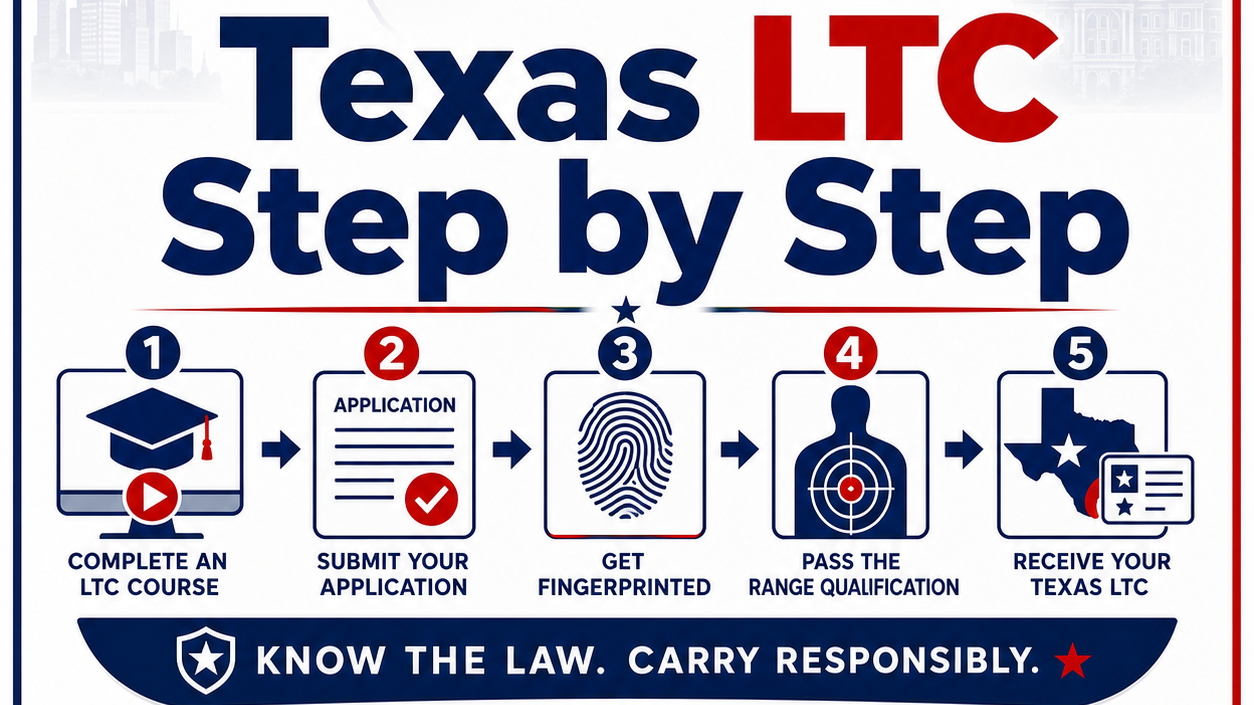
Texas LTC Step by Step
Getting your Texas License to Carry, also known as a Texas LTC, can feel confusing if you have never done it before. The good news is that the process is simple when you follow it in the right order.
This Texas LTC step-by-step guide walks you through each part of the process, from checking eligibility to receiving your license from Texas DPS.
Step 1: Confirm You Are Eligible
Before you begin the Texas LTC process, make sure you are eligible.
Texas LTC applicants must meet state and federal requirements to legally possess a handgun. Certain criminal convictions, pending charges, protective orders, chemical dependency issues, unpaid child support, tax issues, and other legal matters may affect eligibility.
If you are unsure whether you qualify, check the official Texas DPS License to Carry information before applying.
Step 2: Choose Your Texas LTC Class
Next, choose how you want to complete the classroom portion of the Texas LTC training.
You generally have two options:
- Take an in-person Texas LTC class
- Take an approved online Texas LTC class
Online LTC classes are convenient because you can complete the classroom portion from home and work at your own pace. In-person classes may be a good fit if you prefer direct instruction in a classroom setting.
Both options can satisfy the classroom training requirement when completed through an approved provider.
Step 3: Complete the Classroom Training
The classroom portion of Texas LTC training covers important safety and legal topics.
Common subjects include:
- Texas handgun laws
- Safe handgun use and storage
- Use of force and deadly force
- Non-violent dispute resolution
- Carry methods and responsibilities
- Situational awareness
This training helps you understand not just how to carry, but how to carry responsibly.
Step 4: Pass the LTC Written Test
As part of the classroom training, you may need to complete a written test covering the material taught in the course.
The test is designed to confirm that you understand the basic laws, safety rules, and responsibilities covered in the Texas LTC class.
Pay attention during the course, review the material, and ask questions if anything is unclear.
Step 5: Complete the Range Qualification
After the classroom portion, you must complete the handgun proficiency requirement. This is commonly called the Texas LTC shooting test or LTC range qualification.
During the range qualification, a qualified LTC instructor will observe your ability to safely handle and fire a handgun.
The goal is not to prove that you are a competitive shooter. The goal is to show that you can safely and responsibly use your handgun.
Step 6: Receive Your LTC-104 Form
After completing the required classroom and range training, you will receive your official training certificate.
Depending on the type of course you completed, this may be:
- LTC-104
This form proves that you completed the required Texas LTC training. You will need it for your DPS application, so do not lose it.
Step 7: Submit Your Texas DPS LTC Application
Once your training is complete, go to the Texas DPS License to Carry application system and submit your application.
You will need to provide personal information, answer background questions, and pay the state application fee.
Make sure all information is correct before submitting. Errors can delay processing.
Step 8: Schedule Your Fingerprint Appointment
After submitting your application, schedule your fingerprint appointment with the approved fingerprinting provider used for Texas LTC applicants.
Fingerprints are required so DPS can complete the background check.
Complete this step as soon as possible so your application does not sit unfinished.
Step 9: Upload Your Training Certificate
Next, upload your LTC-104 form and any other documents requested by Texas DPS.
This is one of the most commonly missed steps. Completing the class is not enough by itself. DPS must receive your training certificate before your application can be fully processed.
Step 10: Check Your Application Status
After your application, fingerprints, payment, and documents are submitted, Texas DPS will review your application.
You can check your Texas LTC status online through the DPS system. Processing times may vary depending on application volume, background review, and whether your paperwork is complete.
Step 11: Receive Your Texas LTC
If your application is approved, Texas DPS will issue your License to Carry. Once you receive it, review the information on the license to make sure everything is correct.
You should also continue learning about Texas carry laws, restricted locations, signage, reciprocity, and safe carry practices.
Common Mistakes to Avoid
Many LTC delays happen because of simple mistakes.
Avoid these common issues:
- Forgetting to upload the LTC-104
- Entering incorrect information on the DPS application
- Waiting too long to schedule fingerprints
- Taking an unapproved course
- Assuming the online class alone completes the full process
- Ignoring DPS requests for additional documents
A little attention upfront can save you time later.
Is a Texas LTC Still Worth Getting?
Yes, for many people. Even though Texas has permitless carry, a Texas LTC still offers benefits.
An LTC may help with:
- Reciprocity when traveling to other states
- Proof of handgun training
- Understanding Texas gun laws
- Confidence when carrying
- Certain carry locations where licensing matters
- Smoother interactions when questions come up
For responsible handgun owners, the LTC is still a valuable credential.
Final Thoughts
The Texas LTC process is easier when you break it into steps:
- Confirm eligibility
- Choose your LTC class
- Complete classroom training
- Pass the written test
- Complete range qualification
- Receive your LTC-104
- Submit your DPS application
- Schedule fingerprints
- Upload documents
- Check your status
- Receive your license
If you are ready to begin, start with your Texas LTC class and work through each step carefully.
Ready to get your Texas LTC? Start your License to Carry training today and take the first step toward carrying responsibly in Texas, by clicking ENROLL NOW for the Online Class from MyLTCTexas.com.
Disclaimer: This article is for general educational purposes only and is not legal advice. Always verify current requirements with Texas DPS or a qualified legal professional.