
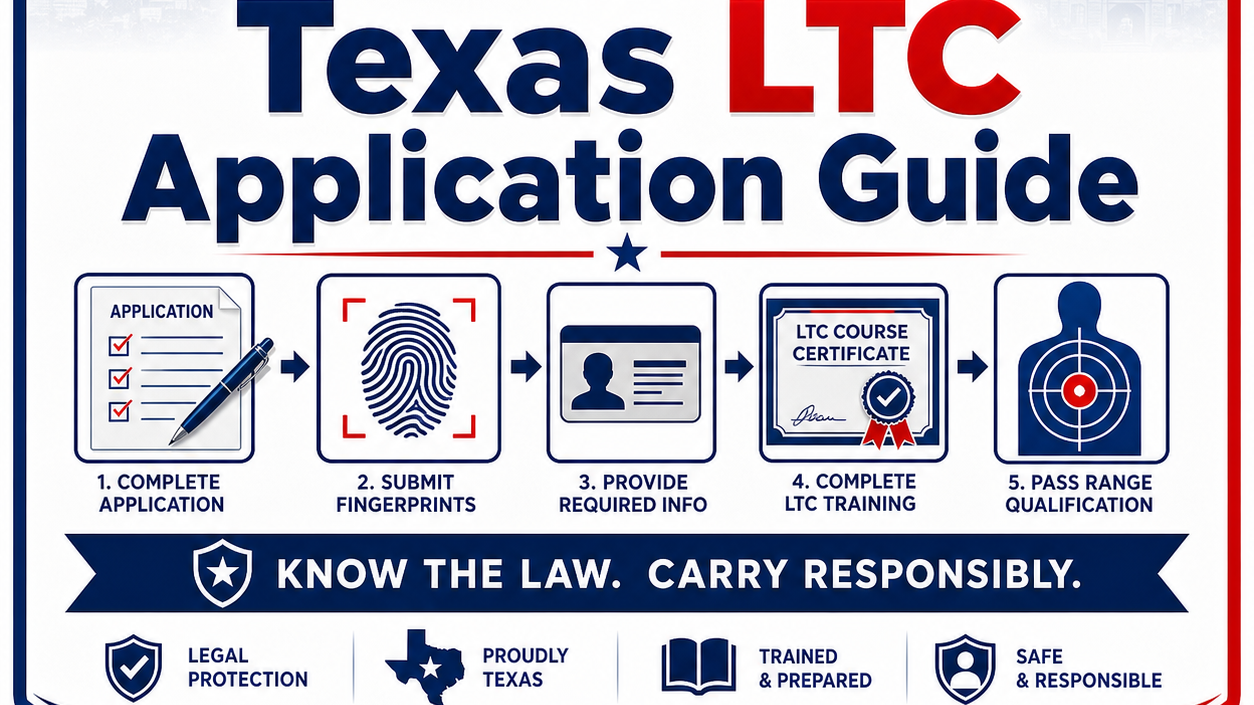
Texas LTC Application Guide
Applying for your Texas License to Carry, also called a Texas LTC, is one of the final steps in getting your handgun license. Once you understand what Texas DPS needs, the application process becomes much easier, especial with our Texas LTC Application Guide.
This Texas LTC application guide explains how to apply, what documents you need, and how to avoid common mistakes that can delay your license.
What Is the Texas LTC Application?
The Texas LTC application is the official application submitted through the Texas Department of Public Safety. DPS uses the application, your fingerprints, your training certificate, and your background information to determine whether you qualify for a License to Carry.
You can complete the application online through the Texas DPS handgun licensing system.
Before You Apply
Before starting your Texas LTC application, it helps to have a few things ready.
You may need:
- A valid Texas driver license or ID
- Current contact information
- Address history
- Employment information, if requested
- Payment method for state fees
- Your LTC-104 training certificate
- Any supporting documents DPS may require
Having these items ready can help you move through the application without stopping halfway.
Step 1: Complete Your LTC Training
Before your application can be approved, you must complete the required Texas LTC training.
Training includes:
- Classroom instruction
- Written test
- Handgun proficiency or range qualification
Depending on how you take the class, you will receive either an LTC-104 form after completion. This form proves that you completed the required training.
Step 2: Start Your DPS Application Online
Go to the Texas DPS License to Carry application website and begin your application.
You will enter personal information such as your name, address, date of birth, ID information, and background details.
Be careful when entering your information. Your application should match your identification and training documents. Small mistakes can create delays.
Step 3: Pay the State Application Fee
During the application, you will pay the required Texas LTC application fee.
The fee may vary depending on applicant type. Some applicants, such as certain veterans, active-duty military, peace officers, or other qualifying groups, may be eligible for reduced fees or exemptions.
Always check the current DPS fee schedule before applying.
Step 4: Schedule Your Fingerprints
After submitting your application, you will need to schedule fingerprints through the approved fingerprinting provider used by Texas DPS.
Fingerprints are required for the background check. If you delay this step, your application may not move forward.
Schedule your fingerprint appointment as soon as possible after beginning your application.
Step 5: Upload Your LTC-104
After completing training, upload your LTC-104 form to Texas DPS.
This is one of the most important parts of the application process. Completing the class does not automatically mean DPS has your certificate. You must make sure your training document is submitted correctly.
If DPS does not receive your certificate, your application may stay incomplete.
Step 6: Submit Any Extra Documents
Some applicants may need to submit additional documents. This can depend on criminal history, military status, name changes, residency, or other factors.
If DPS requests extra information, respond quickly and carefully. Missing documents are a common reason for delays.
Step 7: Wait for DPS Review
Once DPS receives your application, payment, fingerprints, training certificate, and any required documents, they will review your file.
Processing time can vary. Applications with complete and accurate information usually move faster. Applications with missing documents or background issues may take longer.
You can check your Texas LTC application status through the DPS system.
Common Texas LTC Application Mistakes
Avoid these common mistakes when applying:
- Starting the application but forgetting fingerprints
- Forgetting to upload the LTC-104
- Entering the wrong address or ID information
- Using a name that does not match your ID
- Taking a course that does not meet DPS requirements
- Ignoring DPS requests for more information
- Waiting too long to complete required steps
The smoother your paperwork, the smoother your approval process usually is.
Can You Apply Before Taking the LTC Class?
Many applicants wonder whether they should take the class first or submit the DPS application first.
In many cases, you can begin the DPS application before or after training. However, your application will not be complete until DPS receives your required training certificate and fingerprints.
For most people, the easiest path is to complete the training, schedule fingerprints, submit the DPS application, and upload documents quickly.
How Long Does the Texas LTC Application Take?
Texas LTC processing times vary depending on DPS workload, background check results, and whether your documents are complete.
To avoid delays:
- Complete your training early
- Schedule fingerprints quickly
- Upload your certificate correctly
- Use accurate information on your application
- Watch for DPS messages or document requests
What Happens After Approval?
If DPS approves your application, your Texas License to Carry will be issued and mailed to you. Once you receive it, check the card for accuracy.
After receiving your LTC, continue learning about Texas carry laws, restricted locations, legal signage, reciprocity, and safe carry practices.
Final Thoughts
The Texas LTC application process is manageable when you follow each step:
- Complete your LTC training
- Start the DPS application online
- Pay the required state fee
- Schedule fingerprints
- Upload your LTC-104
- Submit extra documents if needed
- Wait for DPS review
A complete and accurate application gives you the best chance of avoiding delays.
Ready to complete your Texas LTC?
Disclaimer: This article is for general educational purposes only and is not legal advice. Always verify current requirements, fees, and procedures with Texas DPS or a qualified legal professional.